    @PutMapping("/api/v1/posts/{id}")
    public Long update(@PathVariable Long id, @RequestBody PostsUpdateRequestDto requestDto) {
        return postsService.update(id, requestDto);
    }

    @GetMapping("/api/v1/posts/{id}")
    public PostsResponseDto findById(@PathVariable Long id) {
        return postsService.findById(id);
    }
    @Transactional
    public Long update(Long id, PostsUpdateRequestDto requestDto) {
        Posts posts = postsRepository.findById(id)
                .orElseThrow(() -> new IllegalArgumentException("해당 사용자가 없습니다. id=" + id));

        posts.update(requestDto.getTitle(), requestDto.getContent());

        return id;
    }

    @Transactional(readOnly = true)
    public PostsResponseDto findById(Long id) {
        Posts entity = postsRepository.findById(id)
                .orElseThrow(() -> new IllegalArgumentException("해당 사용자가 없습니다. id=" + id));

        return new PostsResponseDto(entity);
    }
postsRepository와 맵핑
JPA의 영속성 컨텍스트란?
엔티티를 영구 저장하는 환경
JPA의 핵심 내용은 엔티티가 영속성 컨텍스트에 포함되어 있냐 아니냐로 갈림
더티 체킹(dirty checking)이란?
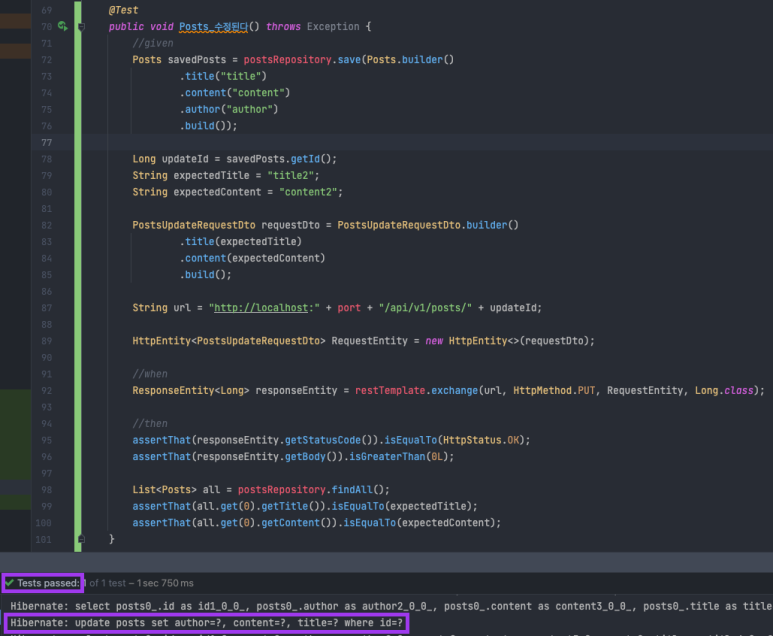
JPA의 엔티티 매니저가 활성화된 상태로 트랜잭션 안에서 데이터베이스에서 데이터를 가져오면 이 데이터는 영속성 컨텍스트가 유지된 상태, 이 상태에서 해당 데이터의 값을 변경하면 트랜잭션이 끝나는 시점에 해당 테이블에 변경분을 반영, 즉, Entity 객체의 값만 변경하면 별도로 Update 쿼리를 날릴 필요가 없다.


댓글